Your motorcycle represents freedom, weekends on the open road, and countless hours of work and care. Unfortunately, thieves may see that same bike as something valuable and easy to move. That is why motorcycle theft prevention in 2026 is about more than turning the handlebars and walking away. Riders now have better options, including GPS trackers, movement alerts, alarmed disc locks, immobilizers, and stronger physical security.
The smartest approach is not to depend on one gadget. It is to make your motorcycle difficult to move, noticeable when disturbed, and easier to locate if it disappears. Whether you park on the street, outside your apartment, at a café, or during a long motorcycle tour, these practical steps can help you build a security routine that actually fits your life.
Why Motorcycle Security Is a Big Topic in 2026
Motorcycle theft is still a serious ownership concern, even when overall theft figures improve. The National Insurance Crime Bureau’s August 2026 report recorded 44,564 motorcycles stolen in the United States during 2025, with only 41% eventually recovered. The figures do not mean every location has the same risk, but they show why prevention and fast reporting matter.
The emphasis on practical protection is current, too. In July 2026, West Mercia Police urged motorbike owners to combine reputable trackers or immobilizers with layered locks, covers, and secure parking. That combination is a sensible starting point for riders almost anywhere.
1. Start With Disc Locks, Chains, and Ground Anchors
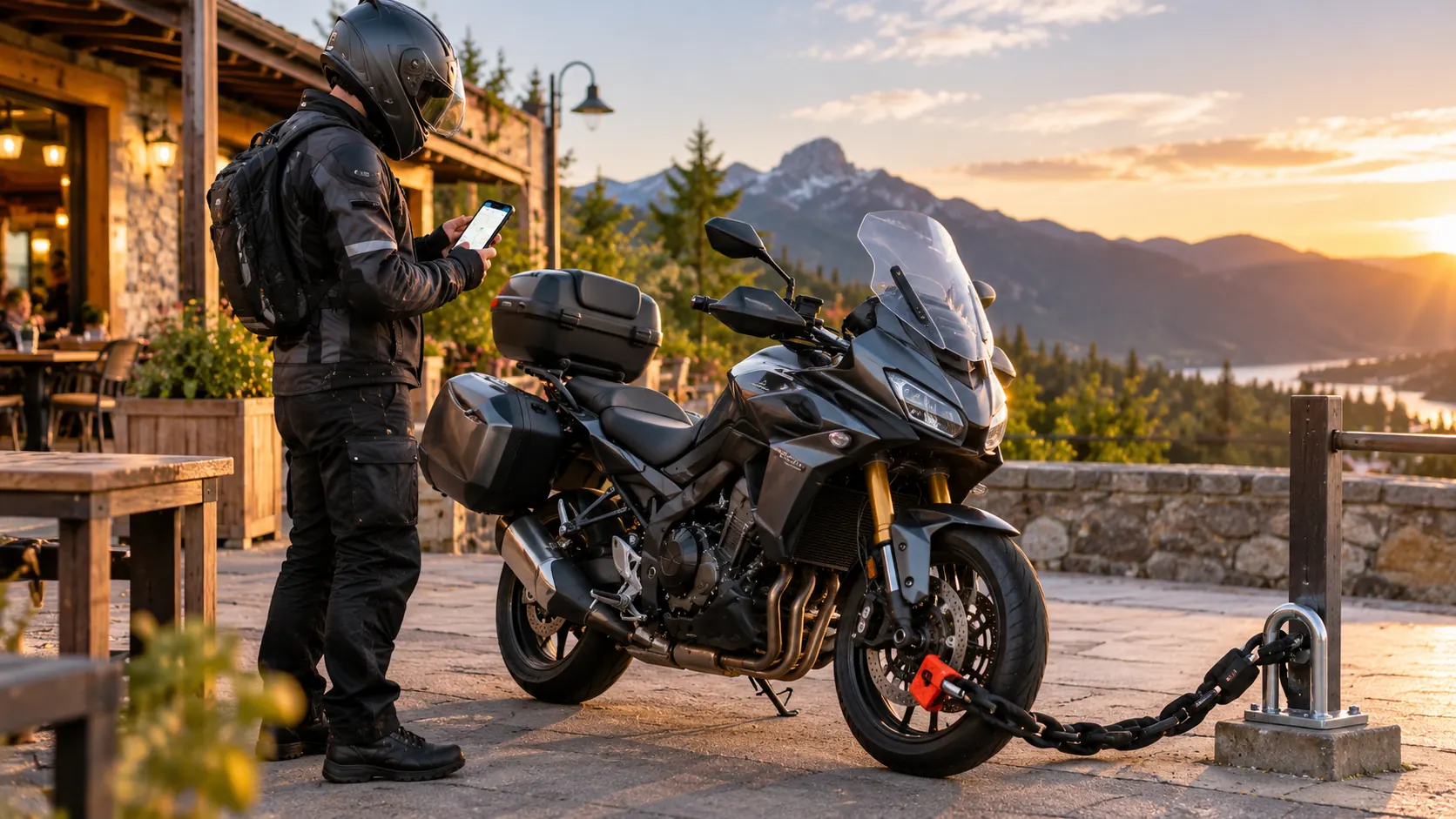
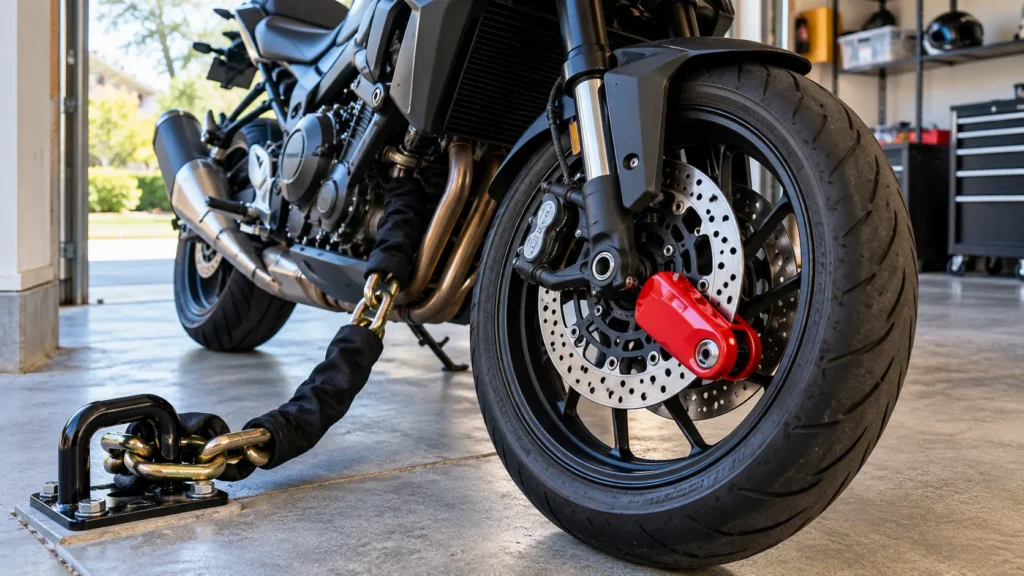
A GPS device can help after a bike moves, but a heavy lock can make moving it harder in the first place. Start by applying the steering lock every time you park. Then add an alarmed disc lock or a substantial motorcycle-rated chain. For home parking, use a professionally installed ground anchor attached to a suitable fixed surface.
Whenever possible, secure the frame or rear wheel to an immovable object. Keep the chain tight and off the ground, where it is harder to attack with tools. Avoid relying on a front wheel alone because some wheels can be removed. The UK police motorcycle-security guide recommends a lock, chain, and cover rather than a steering lock by itself.
When shopping, look for independently evaluated security products. Sold Secure publishes motorcycle lock and chain ratings that can make comparisons more meaningful than packaging claims.
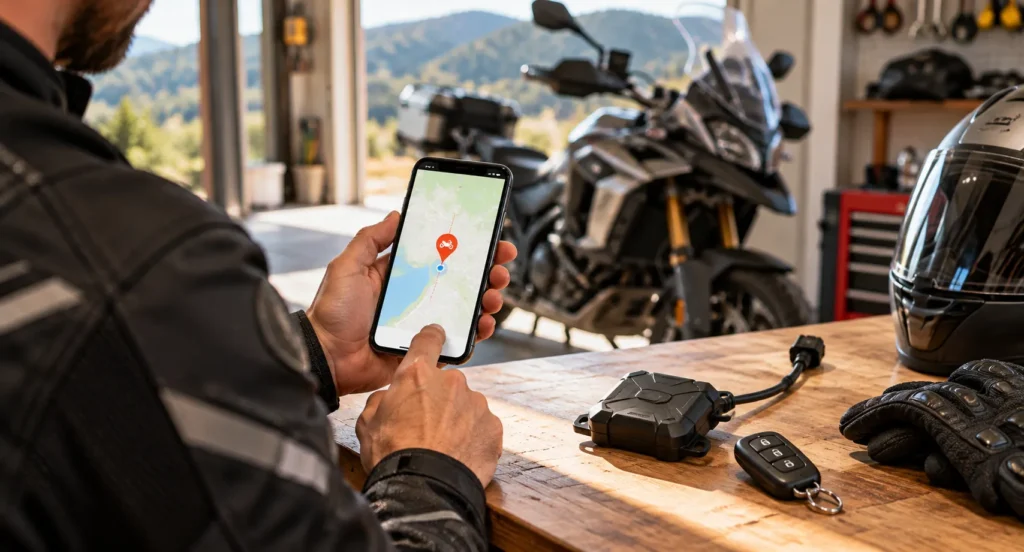
2. Add a GPS Motorcycle Tracker With Movement Alerts
One of the most useful modern upgrades is a discreet GPS motorcycle tracker. Depending on the model, it can notify you when your motorcycle moves unexpectedly, show a reported location in a mobile app, and provide information that may assist police. Some trackers have their own batteries; others connect to the motorcycle electrical system.
Before choosing one, compare the movement-alert delay, location-update frequency, cellular coverage, battery life, waterproofing, subscription cost, and installation requirements. A tracker that works well in your garage but loses cellular service on your touring route may not match your needs. Also ask whether it can continue working if the motorcycle battery is disconnected.
For an example of how these systems differ, Monimoto’s 2026 tracker overview explains its movement-triggered calling system, periodic location updates, and ongoing service fee. It is a manufacturer’s description, not an independent endorsement; compare several brands before buying.
3. Understand the Limits of Bluetooth Item Trackers
A Bluetooth tag can be inexpensive and convenient for finding misplaced belongings, but it is not identical to a dedicated cellular GPS motorcycle tracker. Bluetooth item trackers usually depend on nearby compatible phones to relay locations, and updates may be delayed or unavailable. They also include anti-stalking protections.
For example, Apple explains its unwanted-tracking alerts, which can notify someone when an unfamiliar compatible tracker appears to be traveling with them. That privacy feature is important, but it can also limit how discreet a tag is during a theft. If you use a Bluetooth tag, treat it as a supplementary locating aid, not your only anti-theft measure.
4. Use Alarms and Immobilizers Without Neglecting the Basics
A motion-sensitive alarm can attract attention when someone lifts, tilts, or moves your motorcycle. An immobilizer can make unauthorized starting more difficult. Some modern security packages combine these functions with tracking and phone alerts. Choose professionally installed equipment where required, and confirm compatibility with your bike’s electronics and warranty.
Remember that an alarm is only useful if someone notices it. Test the siren, app notifications, key fob, and battery condition regularly. If you already enjoy motorcycle technology, our articles on advanced rider assistance systems and motorcycle dash cams explore other ways electronics can support riders. A dash cam might document an incident, but it does not replace locks or a dedicated tracker.
5. Make Home and Overnight Parking Less Attractive to Thieves
Good parking habits are free and surprisingly valuable. Use a locked garage or secure outbuilding when available. If you must park outside, choose a visible, well-lit location and anchor the motorcycle to something solid. A properly fitted cover hides the model and adds another obstacle. Security lighting and cameras can help document suspicious activity but should complement physical locks, not replace them.
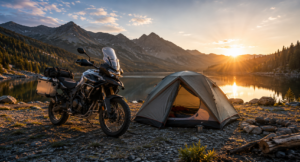
For apartment parking, ask management whether secure anchors or monitored spaces are available. On an overnight trip, look at parking arrangements before booking accommodation. Riders planning remote getaways can combine this advice with our adventure motorcycle camping guide, which covers preparation for longer journeys.
6. Keep Records and Check Your Insurance
Photograph your motorcycle from several angles and record its vehicle identification number (VIN), registration, unique accessories, and proof of purchase. Keep the information somewhere accessible even if the bike is gone. If you buy a used motorcycle in the United States, the free NICB VINCheck can identify some insurer-reported stolen or salvage vehicles, although it is not a complete history report.
Review your insurance policy before a loss. Liability coverage alone generally does not pay to replace your stolen bike. According to the Insurance Information Institute’s motorcycle insurance guide, comprehensive insurance typically covers theft, subject to policy terms and a deductible. Ask your insurer whether locks, trackers, or alarm systems affect premiums and whether custom equipment needs extra coverage.
7. Know What to Do if Your Motorcycle Is Stolen
If the bike disappears, verify that it has not been moved or towed legally. Then contact local police promptly, providing the VIN, registration, photographs, last known location, and any tracker information. Save screenshots and timestamps of alerts. Notify your insurer and follow its claim instructions.
Never confront suspected thieves or attempt to retrieve the motorcycle yourself. A location pin may be approximate, delayed, or inside private property. Share it with law enforcement instead. Quick, accurate reporting is valuable, but your personal safety always comes first.
A Simple Motorcycle Security Checklist
- Remove your key and engage the steering lock, even during brief stops.
- Add an alarmed disc lock and a high-quality chain whenever practical.
- Anchor the bike to a fixed object at home or during overnight parking.
- Test your tracker, cellular service, notification settings, and battery regularly.
- Use a motorcycle cover and choose visible, well-lit parking locations.
- Keep photographs, VIN details, insurance information, and ownership documents ready.
- Include security checks in your normal pre-ride routine alongside the essential motorcycle gear you already inspect.
Final Thoughts
The best motorcycle theft prevention strategy in 2026 is layered: make the bike difficult to take, make interference noticeable, and prepare for a fast response. A strong chain, quality disc lock, reliable tracker, and smart parking choices can work together without requiring a complicated setup.
No device guarantees recovery or prevents every theft. But a consistent security routine helps protect the motorcycle you worked hard to own, leaving you more time to enjoy the road ahead.