Motorcycles offer freedom, adventure, and a special connection to the open road. But as riders, we also share a responsibility to protect the places we love to explore. Eco-friendly motorcycle riding is about making smarter choices that reduce waste, lower fuel use, and help keep scenic routes enjoyable for future riders.
The good news is that riding greener does not mean giving up the joy of motorcycling. You do not have to park your bike forever or switch to a completely different lifestyle. Small changes in maintenance, gear choices, riding habits, and trip planning can make a real difference. Whether you ride every weekend, commute on two wheels, or plan long-distance tours, this guide will help you reduce your environmental impact without losing the thrill of the ride.
Why Eco-Friendly Motorcycle Riding Matters
Transportation plays a major role in emissions, and riders are becoming more aware of how their habits affect the environment. According to the Environmental Protection Agency, transportation is one of the largest sources of greenhouse gas emissions in the United States. While motorcycles are often more fuel-efficient than many cars, they still require fuel, oil, tires, parts, and regular upkeep.
That is why sustainable motorcycle riding is not just about what you ride. It is also about how you ride, how you maintain your bike, what gear you buy, and how you treat the places you visit. A greener approach can help reduce pollution, save money, extend the life of your motorcycle, and make every ride feel more intentional.
1. Keep Your Motorcycle Well-Maintained
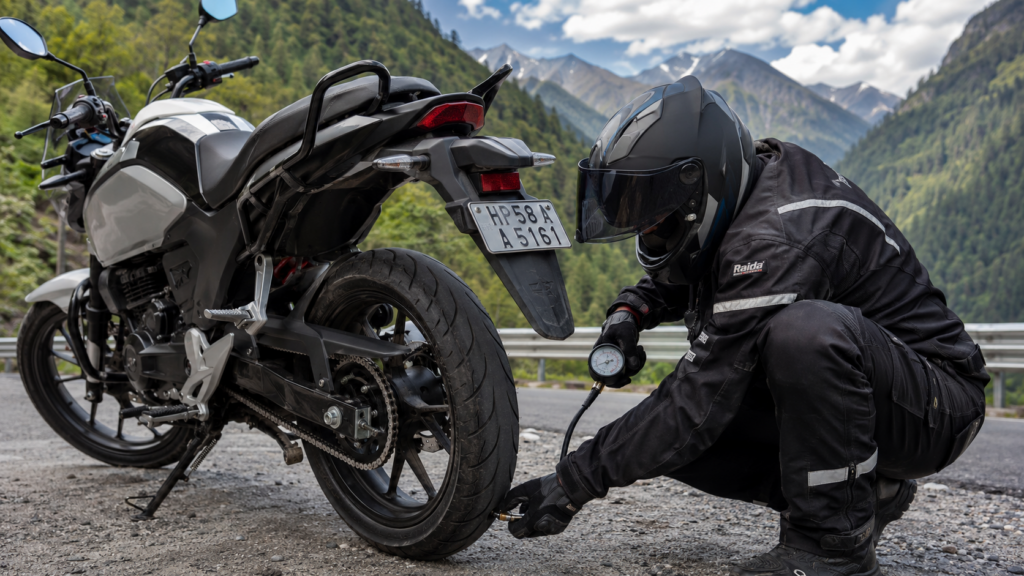
A well-maintained motorcycle runs cleaner, uses fuel more efficiently, and performs better on the road. Poor maintenance can lead to wasted fuel, excessive emissions, rough engine performance, and preventable repairs. Before every ride, check the basics: tire pressure, chain condition, oil level, lights, brakes, and fluid leaks.
Proper tire pressure is especially important. Underinflated tires create more rolling resistance, which can reduce fuel economy and wear out the tires faster. A clean air filter can also help your engine breathe properly, while fresh oil helps reduce friction and protects internal parts. If your motorcycle has a fuel-injection system, keeping it tuned and serviced can improve throttle response and fuel use.
For more rider preparation tips, you can also review Bike Down To I Town’s guide on essential motorcycle gear every rider should own.
2. Ride Smoothly And Avoid Wasting Fuel
Your riding style has a big impact on fuel use. Hard acceleration, late braking, high speeds, and constant throttle changes burn more fuel than smooth, steady riding. You can reduce waste by accelerating gradually, shifting at the right time, keeping a safe following distance, and looking far ahead so you can react early instead of braking suddenly.
Planning your route also helps. Sitting in heavy traffic wastes fuel and adds stress to the ride. Whenever possible, choose open routes with fewer stop-and-go sections. If you are riding with friends, plan fuel stops and meeting points ahead of time so the group does not waste miles doubling back or searching for each other.
Smart riding is not only greener. It can also make you safer. Smooth throttle control, steady cornering, and early hazard scanning are core defensive riding habits. For more information on safer riding habits, visit the Motorcycle Safety Foundation.
3. Choose Sustainable Motorcycle Gear When Possible
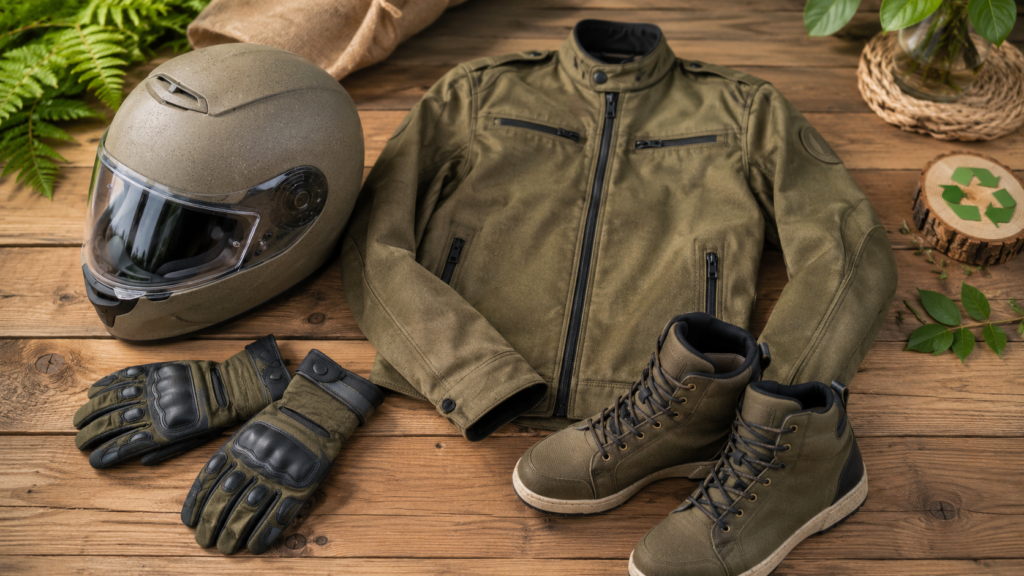
Motorcycle gear is changing. In 2026, more riders are paying attention to sustainable materials, longer-lasting products, and brands that reduce waste. Eco-friendly gear may include jackets made with recycled materials, helmets with more sustainable components, repairable gloves, vegan leather alternatives, and packaging that uses less plastic.
Still, safety should come first. Do not choose gear only because it is marketed as green. Look for protective gear that fits properly and meets recognized safety standards. A jacket that lasts for years is often more sustainable than a cheaper one that needs replacement after one season. Durable gear reduces waste and gives riders better value over time.
Before buying new gear, check whether your current gear can be repaired. Zippers, snaps, liners, and small tears can often be fixed. You can also donate usable gear, sell it to another rider, or recycle parts where local programs allow it. For helmet and gear safety guidance, riders can review resources from the National Highway Traffic Safety Administration.
4. Pack Light For Better Efficiency
Extra weight affects handling, braking, tire wear, and fuel use. If you are going on a weekend ride or motorcycle camping trip, pack only what you need. Heavy luggage, oversized bags, and unnecessary tools can make your motorcycle work harder than it should.
Use lightweight luggage, compact camping gear, and reusable containers. A refillable water bottle is better than buying disposable plastic bottles along the route. Reusable utensils, compact cookware, and dry bags can also reduce waste while keeping your setup organized.
When packing, balance the load evenly and keep heavier items low and close to the center of the bike. This improves stability and reduces strain on the motorcycle. A lighter, balanced bike is easier to ride and more enjoyable on twisty roads, gravel paths, and long-distance routes.
5. Reduce Waste On Road Trips
Motorcycle road trips can create waste quickly if you are not paying attention. Gas station snacks, plastic bottles, disposable coffee cups, and single-use packaging add up over time. Before your next ride, pack a small reusable kit with a water bottle, travel mug, utensils, napkin, and compact trash bag.
If you stop for food, support local restaurants that use less packaging or allow reusable containers. When camping or stopping at scenic overlooks, follow the Leave No Trace principles. Pack out everything you bring in, stay on approved roads and trails, and avoid disturbing wildlife or fragile landscapes.
This matters because many of the best motorcycle routes pass through forests, mountain roads, lakes, parks, and small communities. Respecting those places helps keep them open and welcoming for future riders.
6. Consider Electric Motorcycles And Cleaner Technology
Electric motorcycles are becoming more visible, especially for commuters and riders who take shorter daily trips. They offer quiet operation, instant torque, and no tailpipe emissions. While they may not fit every rider’s needs yet, improvements in range, charging, and battery technology continue to make electric motorcycles more practical.
If you are not ready to switch to electric, you can still choose a fuel-efficient motorcycle, maintain your current bike well, and ride in a way that reduces waste. Riders who mostly commute may also consider smaller-displacement motorcycles or scooters, which often use less fuel than larger touring or performance bikes.
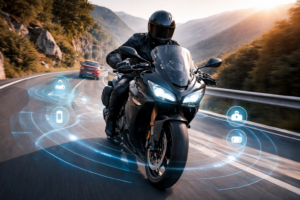
The future of motorcycling will likely include a mix of gas-powered bikes, electric motorcycles, hybrid ideas, and smarter safety technology. Bike Down To I Town has also covered how modern systems are changing the ride in its article on advanced rider assistance systems and motorcycle safety technology.
7. Support Green Events, Clean-Up Rides, And Responsible Riding Groups
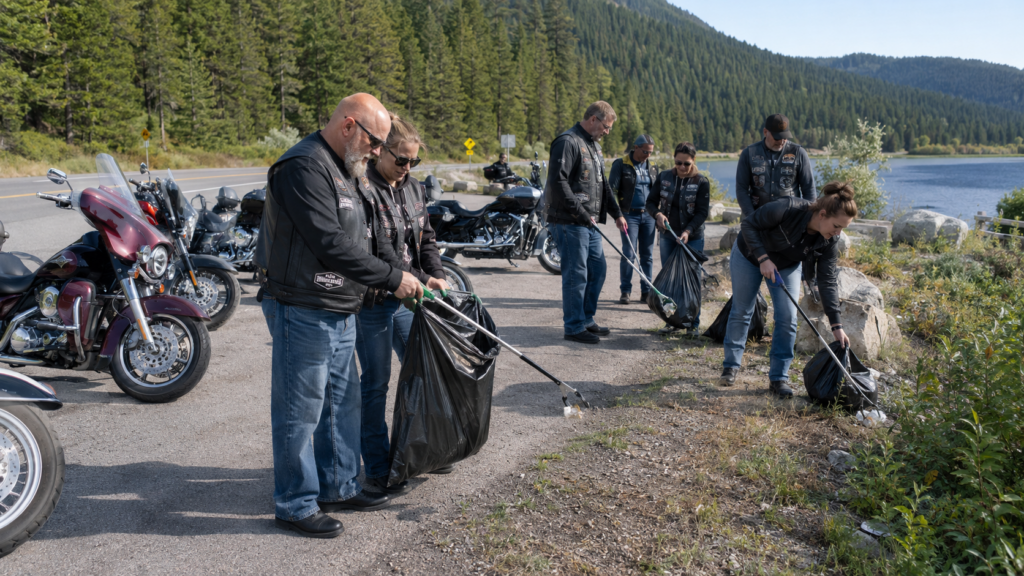
Eco-friendly riding is easier when the motorcycle community works together. Look for local clean-up rides, charity events, recycling programs, and riding groups that promote responsible road use. Even small actions, like picking up trash at a rest stop or encouraging riders to avoid illegal trail use, can help protect the reputation of the riding community.
You can also support organizations that protect public lands, improve outdoor access, and encourage responsible recreation. Groups such as The Conservation Fund and Recreation.gov can help riders learn more about public lands, camping rules, and outdoor stewardship.
More Tips For Eco-Friendly Motorcycle Travel
- Use reusable bottles and containers: Reduce single-use plastic during rides.
- Plan efficient routes: Avoid unnecessary miles and heavy traffic when possible.
- Dispose of oil properly: Recycle used motor oil and filters through approved facilities.
- Buy quality parts: Durable parts usually last longer and reduce waste.
- Respect quiet areas: Avoid excessive noise near neighborhoods, parks, and wildlife areas.
- Share rides wisely: Group rides can reduce repeated trips when planned well.
Final Thoughts
Eco-friendly motorcycle riding is not about perfection. It is about making better choices one ride at a time. By maintaining your bike, riding smoothly, choosing durable gear, packing light, reducing waste, and respecting the places you visit, you can enjoy the open road while lowering your impact.
Motorcycling has always been about freedom. A greener approach helps protect that freedom by keeping roads, trails, and destinations cleaner for everyone. The next time you gear up, think about how your ride can be cleaner, smarter, and more responsible.
Ride far, ride safe, and leave every road better than you found it.