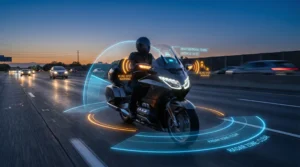
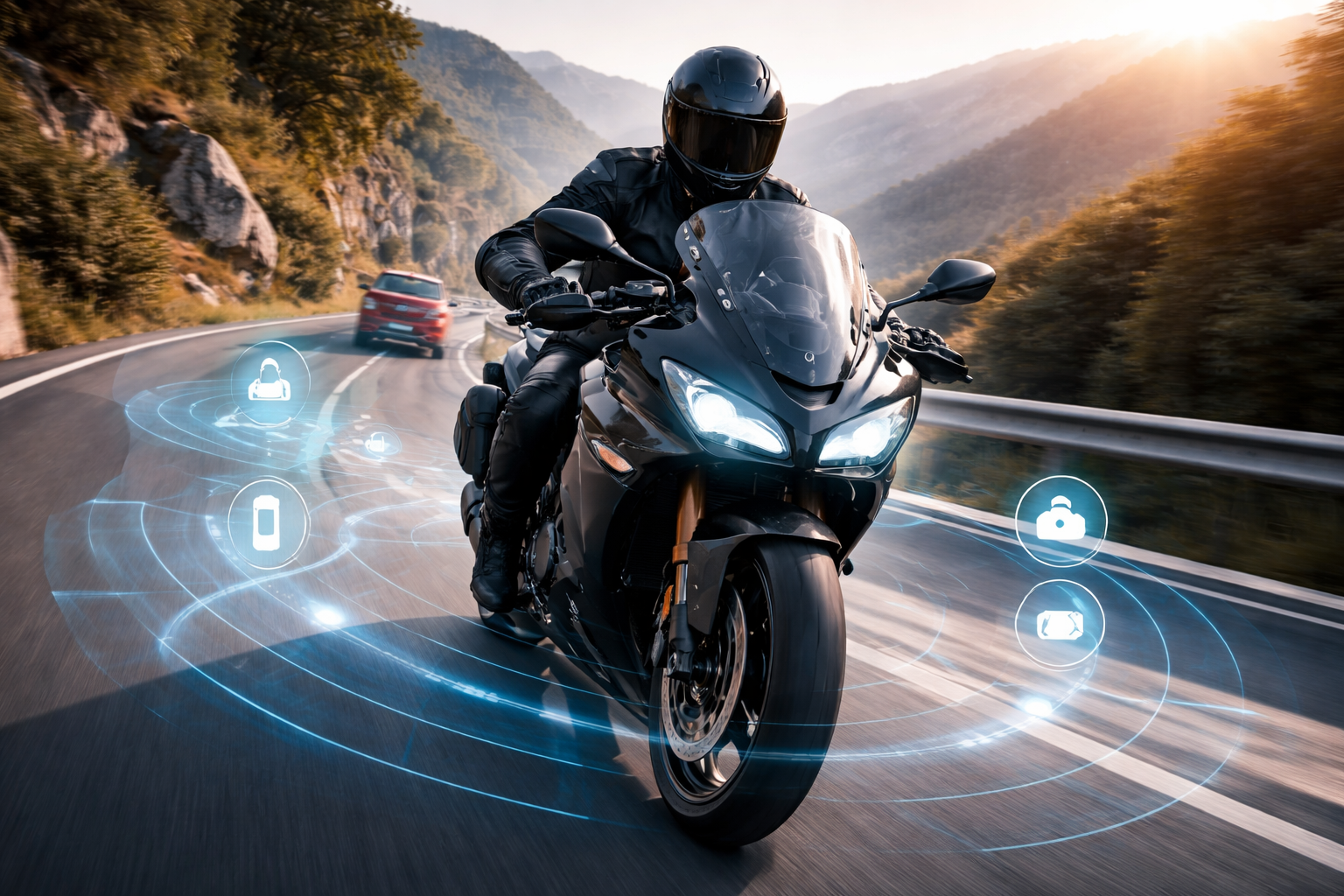
The motorcycle industry is experiencing rapid advancements in technology, particularly in safety systems designed to protect riders. As we approach 2026, the integration of advanced rider assistance systems (ARAS) in motorcycles is becoming more prevalent, offering a new level of protection, comfort, and overall safety for riders. In this article, we’ll explore the most innovative motorcycle safety technologies that are set to change the way we ride.
What Are Advanced Rider Assistance Systems?
Advanced Rider Assistance Systems (ARAS) are technologies integrated into motorcycles to help riders avoid accidents and improve overall safety. These systems use a combination of sensors, cameras, radar, and artificial intelligence to provide real-time data to the rider. From collision warnings to automatic braking, ARAS is designed to assist riders in complex traffic situations and prevent potential accidents before they occur.
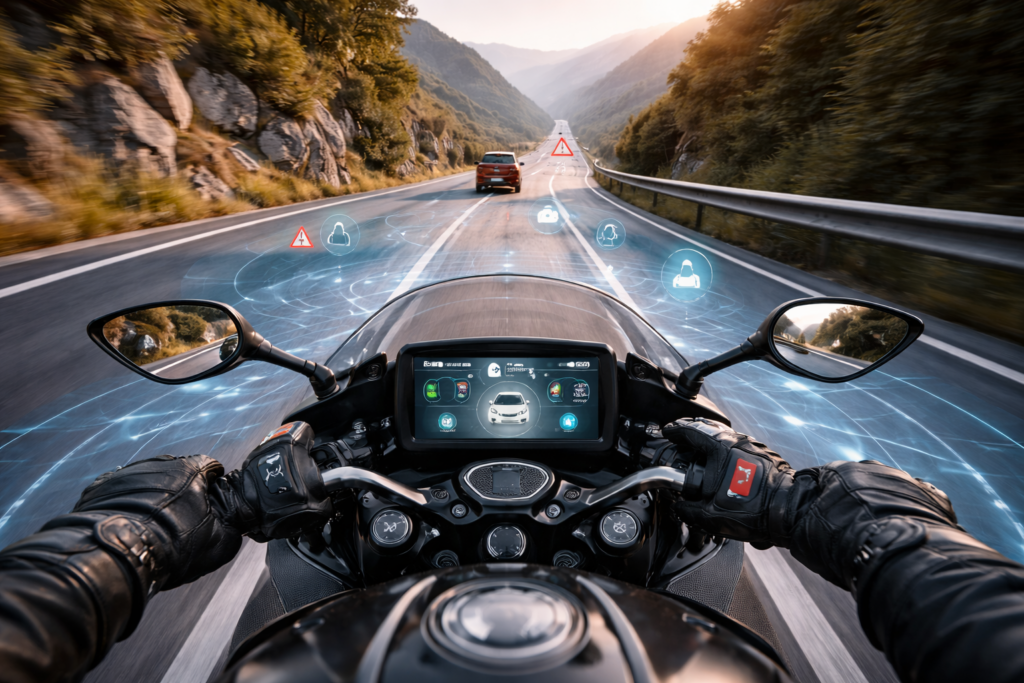
Key Motorcycle Safety Technologies for 2026
As the motorcycle industry evolves, new safety features are becoming more common. Here are the top technologies you should expect to see in motorcycles by 2026:
1. Adaptive Cruise Control
Adaptive cruise control is a revolutionary feature that maintains a safe distance between motorcycles and other vehicles on the road. By using radar and sensors, the system automatically adjusts the speed of the motorcycle based on traffic flow. This feature is especially useful for long highway rides, allowing riders to focus on steering while the system manages speed and distance. Learn more about adaptive cruise control in motorcycles.
2. Emergency Braking Assistance
Emergency Braking Assistance (EBA) is designed to help prevent accidents by automatically applying the brakes in an emergency. If a rider fails to react in time, this system can help reduce the severity of the collision or even avoid it altogether. By detecting obstacles and calculating the distance, EBA ensures that the motorcycle responds faster than the rider can, providing an additional layer of safety. Read more about emergency braking systems.
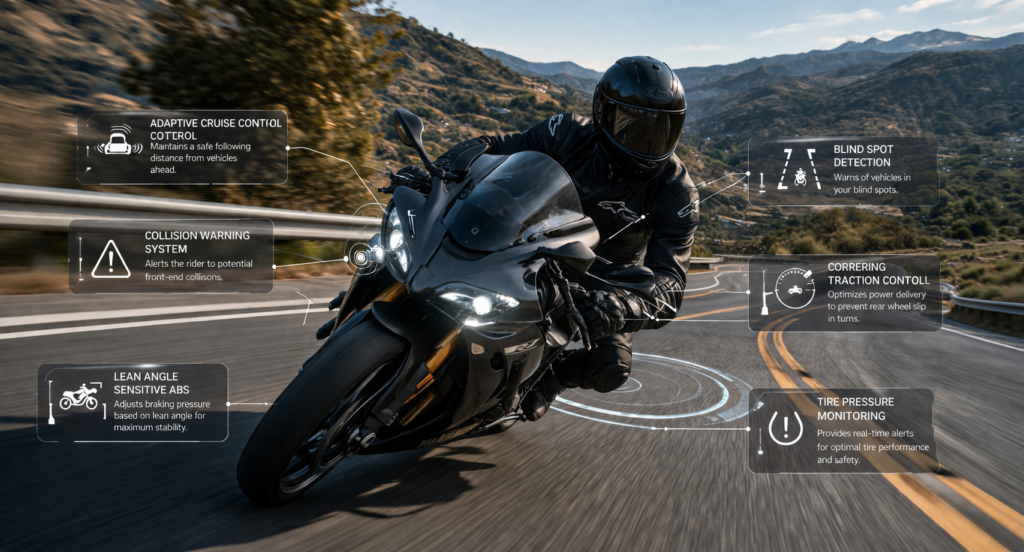
3. Blind Spot Detection
Blind spot detection systems are increasingly being incorporated into motorcycles, offering riders a clear view of their surroundings. The system uses sensors or cameras to monitor blind spots and alerts the rider if another vehicle is present. This feature can be a game-changer for riders, especially in heavy traffic or when changing lanes. Explore the impact of blind spot detection on motorcycle safety.
4. Lane-Keeping Assistance
Lane-keeping assistance helps riders stay within their lane, particularly in challenging riding conditions. Using cameras and sensors, this technology can detect if a rider begins to drift out of their lane without signaling. If the rider doesn’t correct the motorcycle’s position, the system will gently steer the bike back into the lane, ensuring better control and safety. Why lane-keeping assistance is crucial for 2026 motorcycles.
Why Is Motorcycle Safety Technology Important?
Motorcycle safety technology is essential for reducing accidents and injuries. Unlike cars, motorcycles are more vulnerable to crashes due to their smaller size and less stable design. By integrating advanced safety features, manufacturers can help riders avoid accidents, reduce the severity of crashes, and improve the overall riding experience. These technologies don’t replace the need for safe riding practices but serve as a powerful aid to help prevent accidents.
The Future of Motorcycle Safety
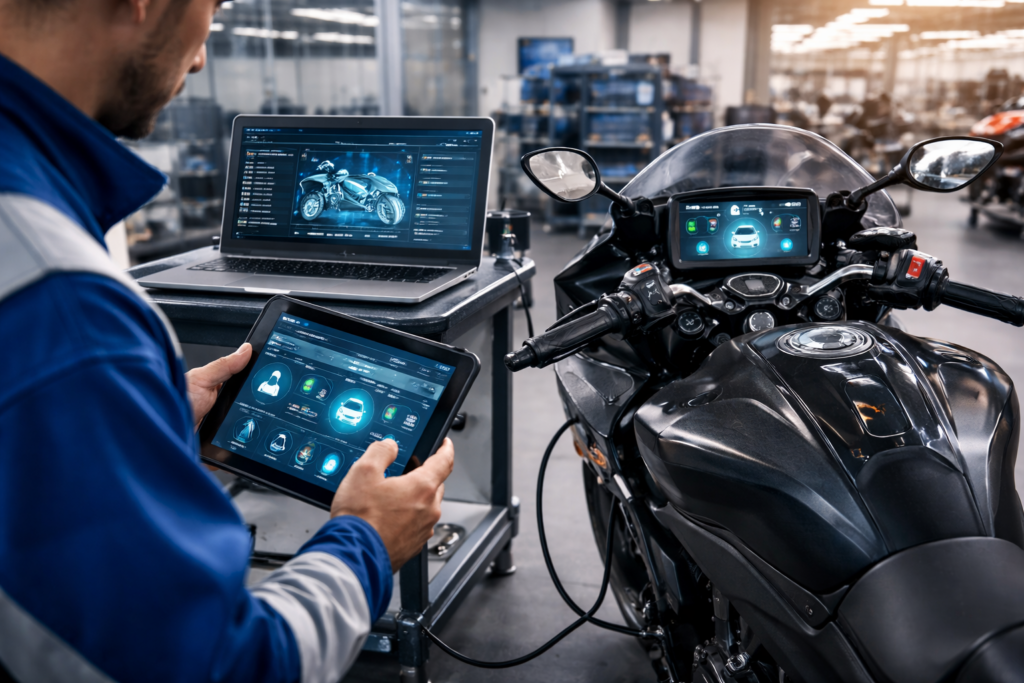
As we move further into the 2020s, the integration of ARAS in motorcycles is expected to grow. These technologies are continuously evolving, with improvements in sensor accuracy, AI algorithms, and integration with other smart devices. Additionally, the expansion of 5G networks will enable better communication between vehicles and infrastructure, allowing motorcycles to communicate with traffic lights, other vehicles, and road hazards in real-time.
The future also holds the potential for fully autonomous motorcycles, though this technology is still in its infancy. While self-driving motorcycles may seem far off, the continued development of advanced safety systems is laying the groundwork for safer, more intelligent vehicles.
Conclusion
As we look toward 2026, advanced rider assistance systems and motorcycle safety technologies are becoming more than just a trend—they’re becoming the standard for rider safety. Whether it’s adaptive cruise control, emergency braking assistance, or lane-keeping technologies, these innovations are designed to make motorcycling safer and more enjoyable for everyone. Riders should stay informed about these advancements and consider them when purchasing a new motorcycle to ensure they are equipped with the latest safety features.
For more information on motorcycle safety and technology, visit our Motorcycle Safety Blog.