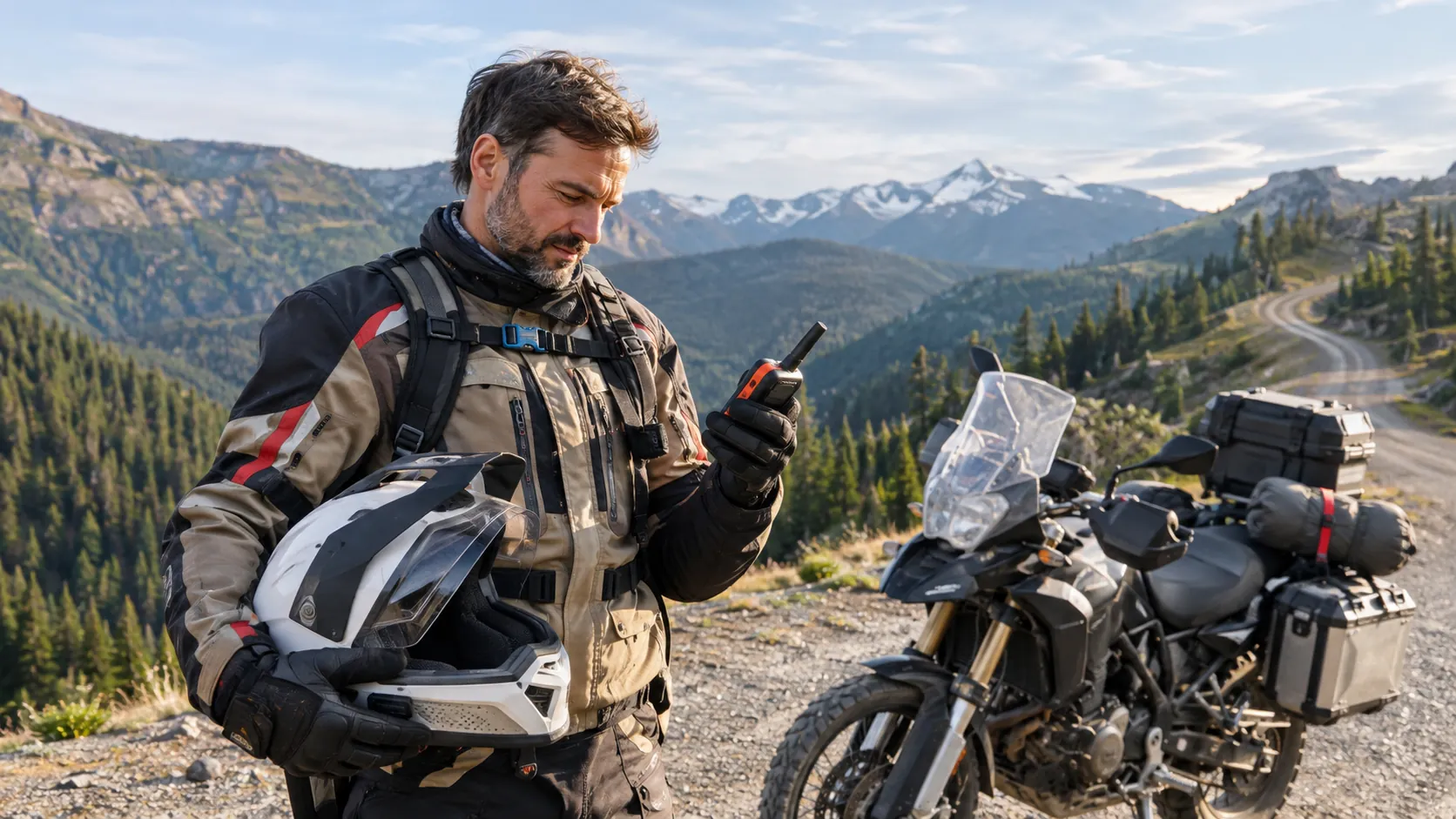
A winding mountain road can be the best part of a motorcycle trip until a flat tire, sudden illness, or crash leaves you far from reliable cell service. That is where satellite SOS for motorcycle riders becomes worth understanding. In 2026, some smartphones can contact emergency services by satellite in supported regions, while dedicated satellite communicators offer messaging, location sharing, and monitored SOS options for remote travel.
These tools are not substitutes for training, protective gear, or careful route planning. They are an extra way to communicate when ordinary networks disappear. Whether you ride a touring motorcycle, explore forest roads, or simply enjoy isolated weekend routes, here is how to prepare without turning your cockpit into a collection of distracting gadgets.
Why Satellite SOS Matters for Motorcycle Trips in 2026
Motorcycle trips often cross places with weak cellular coverage: mountain passes, deep valleys, deserts, and backcountry campsites. A phone may still show a GPS location even when it cannot call or text. This is because GPS positioning and transmitting a message use different systems. Offline maps can guide you, but they do not automatically summon help.
Satellite communication is getting more attention as the technology moves into consumer phones. A 2026 satellite communicator field review discusses newer phone-based services alongside established dedicated messengers. For riders, the question is less about owning the latest device and more about whether it will work on the roads and in the countries you plan to visit.
Our adventure motorcycle camping guide already recommends emergency communication equipment. This guide goes deeper into selecting, setting up, and responsibly using that equipment.
How Does Satellite SOS Actually Work?
Instead of using a nearby cell tower, a supported device communicates with satellites overhead. It can send a distress message containing location information to a monitoring center or emergency service, depending on the product and region. Some devices also allow two-way conversations by short text message. That matters because responders may need to know whether someone is injured, how many people require help, and whether weather or terrain is making access difficult.
Satellite service is not instant or guaranteed. Mountains, dense trees, buildings, and narrow canyons can block the sky. Garmin’s satellite-reception guidance explains why both position data and a satellite communication link matter during an inReach SOS. If it is safe to do so, moving to a clear area may improve the connection.
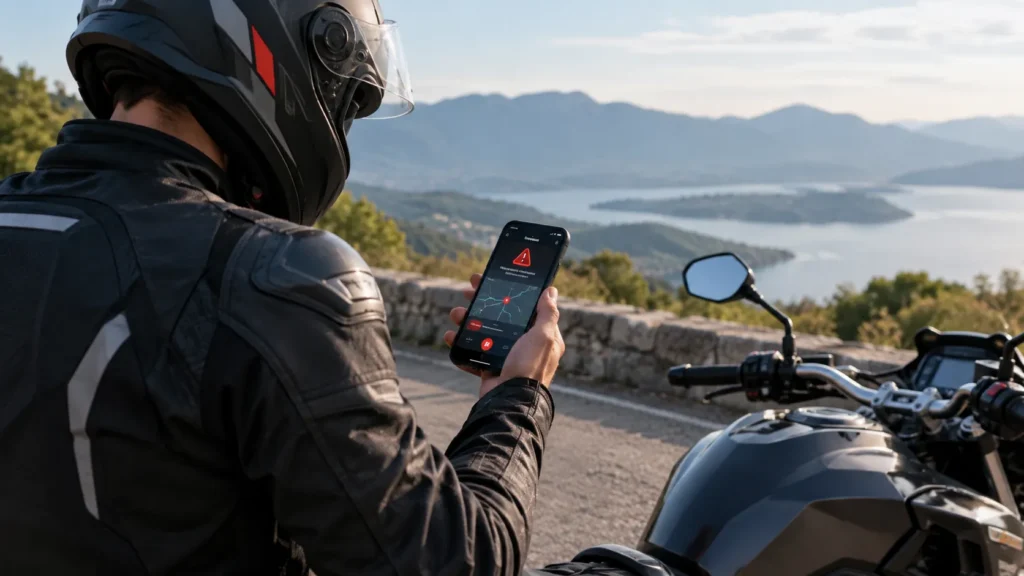
Smartphone Satellite SOS vs. Dedicated Communicators
Satellite Features on Supported Phones
Some iPhone and Google Pixel models support satellite emergency communication. However, functionality depends on the phone, software, country, and current service availability. Apple’s Emergency SOS availability guide lists supported regions and explains its guided connection process. Google’s Pixel Satellite SOS instructions likewise identify eligible devices and countries.
Do not assume a compatible phone purchased in one country will offer the same service everywhere you travel. Coverage can change, and satellite SOS is not currently universal. Before a trip, check the manufacturer’s guidance for the precise destination and model. Use any built-in demonstration mode, where offered, rather than sending a real emergency alert as a test.
Dedicated Two-Way Satellite Messengers
Devices such as Garmin inReach and ZOLEO are designed specifically for off-grid communication. Depending on the model and plan, riders may send check-ins, share a location, exchange short messages, or trigger monitored SOS. Garmin’s inReach comparison describes the messaging and SOS functions of its Mini devices. ZOLEO’s official overview explains its phone-linked messaging and check-in features.
Dedicated messengers can be especially appealing for riders who spend multiple days away from towns. However, service plans, activation requirements, and fees vary. A device may have an SOS button but still require an active subscription to work. Check the terms before leaving home, not when you already need help.
Seven Features Worth Checking Before You Choose
- Regional coverage: Confirm the device and SOS service are permitted and supported where you will ride.
- Two-way messaging: Being able to answer questions may help responders understand the situation.
- Independent operation: Consider whether you can send SOS without a working phone.
- Battery endurance: Compare real-world use with tracking enabled, not only standby claims.
- Water and impact resistance: Motorcycling exposes equipment to rain, vibration, dust, and occasional falls.
- Location sharing: Scheduled check-ins may reassure family or riding partners on longer trips.
- Total cost: Include subscriptions, activation fees, accessories, and possible rescue-related charges.
Remember that a weatherproof case alone does not make electronics crashproof. Secure mounting matters, and carrying the device on your person may be safer than leaving it attached to the motorcycle if you become separated from the bike.
Build a Practical Pre-Ride Communication Plan
Start with a simple routine. Charge the communicator, verify its subscription, install updates, and confirm that the emergency contact details are correct. Download offline maps, save your planned route, and make sure a trusted person knows when you expect to return. Agree on a check-in schedule and what that person should do if you miss multiple updates.
Store a small power bank in a dry bag, but do not depend solely on charging from the motorcycle. If the bike cannot run after a breakdown, your communication setup should still have enough power to function. Our guide to essential motorcycle gear is a useful companion for building the rest of a road-trip checklist.
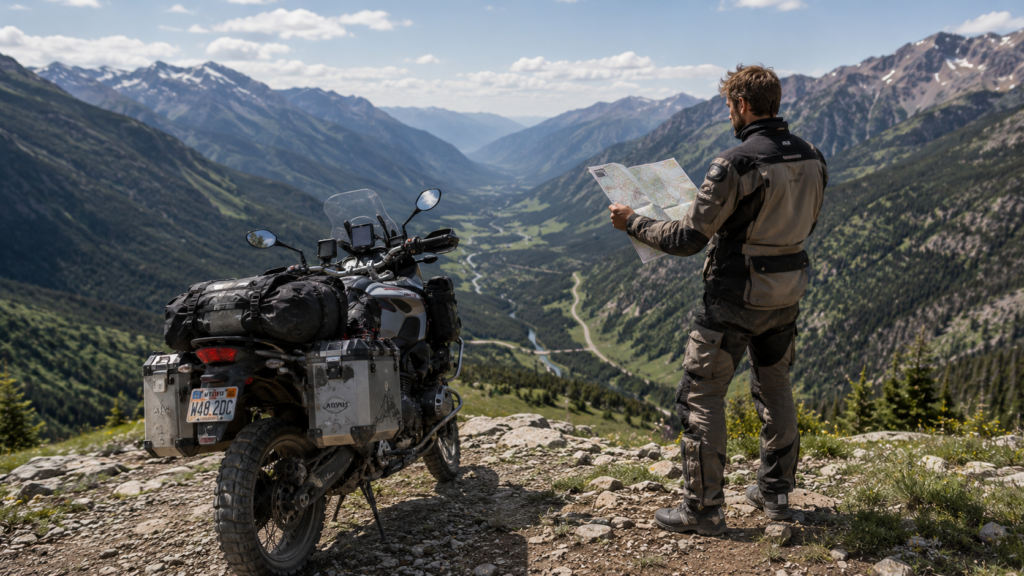
What Should You Do When You Need Emergency Help?
First, move yourself away from traffic or other immediate danger if you can do so safely. Call local emergency services normally when cellular service is available. If no normal connection works and the situation is a genuine emergency, follow your device’s official SOS instructions. Allow time for satellite acquisition, and position the device toward an open sky when possible.
If two-way messaging is available, give responders clear information: your location, the number of people involved, any serious injuries, and nearby hazards. Follow their instructions, conserve power, and remain reachable. Do not trigger an emergency SOS simply to test the system or request routine roadside assistance. A flat tire without immediate danger may be better handled through a normal check-in or non-emergency message.
For general riding preparedness, the Motorcycle Safety Foundation offers training resources that complement emergency equipment. Good riding decisions are still the first line of protection.
Common Satellite Communication Mistakes
One mistake is confusing a GPS navigation app with a satellite messaging service. Another is buying a communicator, leaving it unactivated, and assuming the SOS button will work. Riders also forget that a satellite connection may fail under heavy tree cover or deep canyon walls. Testing basic check-ins legally and safely before the trip helps reveal setup problems.
A third mistake is relying on technology instead of protective gear. A satellite communicator cannot prevent a fall or reduce the physical force of a crash. Continue wearing a suitable helmet and other protective equipment. You can read more in our articles on smart motorcycle helmets and motorcycle airbag vests.
Is Satellite SOS Worth Carrying on a Motorcycle?
For regular city commuting with reliable coverage, an enabled phone emergency feature may be enough for some riders. For solo mountain trips, remote gravel routes, or multi-day touring, a dedicated messenger can provide valuable redundancy. The choice depends on your location, riding frequency, travel companions, and tolerance for ongoing service fees.
Whatever you choose, treat satellite SOS as one part of a larger safety plan: a sound motorcycle, complete protective gear, navigation backups, sufficient fuel and water, and people who know your route. A connected device is most useful when it has been checked before departure.
Final Thoughts
Satellite SOS for motorcycle riders is a practical 2026 topic because emergency communication is no longer limited to specialist expeditions. Phone-based features are expanding, while dedicated messengers continue to serve riders traveling beyond mobile networks. Neither option guarantees a signal or rescue, but both can be useful when correctly configured and supported.
Before your next remote ride, confirm coverage, practice the non-emergency features, charge your devices, and leave a trip plan with someone you trust. The goal is simple: enjoy the open road while giving yourself a better way to ask for help if something goes wrong.